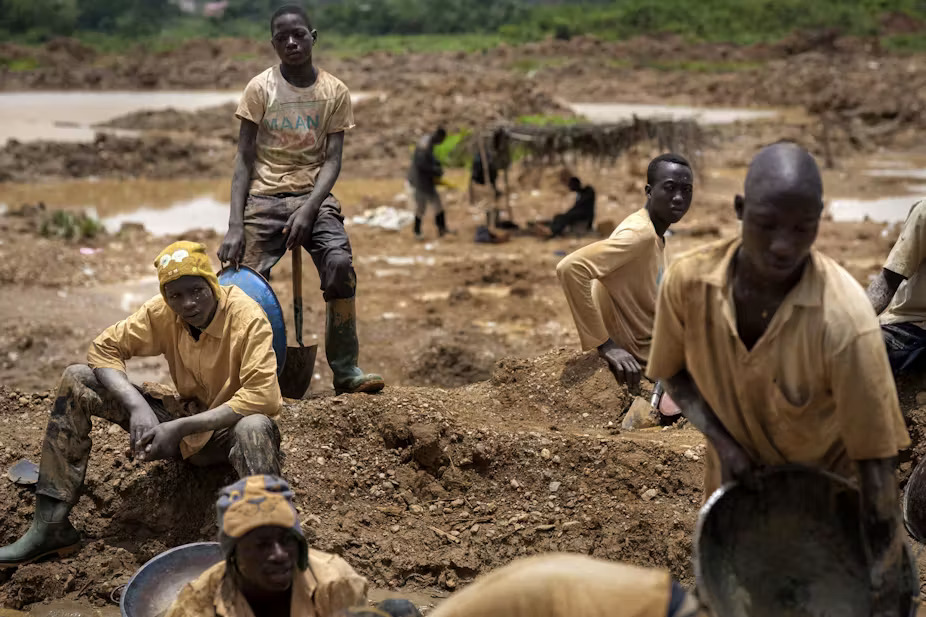
Ghana is Africa’s top gold producer, and you’d think that would make the country flush with money. But here’s the twist: watchdogs estimate that as much as five to six billion dollars’ worth of gold is smuggled out of Ghana every year. That is nearly half of the country’s real production, and it means ordinary Ghanaians never see much of the wealth their land produces.
For years, investigators have pointed out how gold gets smuggled out of Ghana and laundered through other countries. Dubai has been a major destination. Gold leaves Ghana without proper documentation, and once it is in Dubai it is mixed into the formal supply chain and suddenly looks clean. Switzerland is another stop, with refiners there repeatedly named in reports for handling questionable African gold. The numbers are staggering: billions of dollars’ worth of gold leave the continent each year under the radar.
And it is not just the smugglers or middlemen making money. Along the chain, local “big men” such as political patrons, chiefs, and business operators take their slice by protecting or financing small-scale miners. Foreign partners, especially Chinese syndicates, often provide excavators and capital, then split the proceeds with Ghanaian counterparts. Licensed exporters act as the bridge, mixing illicit output with legitimate gold so it can be shipped abroad. At the political level, investigations and even former presidents have admitted that officials in high places shield these operations in exchange for bribes or a share of the profits. In other words, it is not warlords with militias controlling the flow, but a network of local bosses, foreign financiers, and political protectors who capture the value before it ever reaches Ghana’s treasury. That is why Ghana loses tax revenue and local communities lose the investments that should have gone into schools, hospitals, or infrastructure.
The frustrating part is that it does not have to be this way. Ghana does not need to seize every mine or nationalize the whole sector to make sure its people benefit. Other countries have shown that just negotiating better contracts, enforcing tax rules, and making companies share more of the profits can work. Botswana, for example, used diamond revenues not just to build schools and clinics but also to pave thousands of kilometers of roads, expand electricity access, and fund reliable water and sanitation systems. Diamond money helped finance universities, international-standard hospitals, and transport corridors that connected rural areas to markets. Chile did something similar with copper, setting clear rules so private companies could operate, but the state still collected enough to invest in public goods and even build sovereign wealth funds for the future. The lesson is simple: you do not need to nationalize. You just need a government strong enough to hold companies accountable and keep the money flowing back into the country instead of leaking out through Dubai or Switzerland.
So the story is not just about corruption inside Ghana. It is about how international players, from traders in Dubai to refiners in Switzerland, turn a blind eye and profit from the gaps in Ghana’s system. And that is why, no matter how much gold Ghana produces, ordinary people still do not see the wealth in their daily lives.
Sources
- Global Witness. ‘A Golden Web: How Dubai is Complicit in Illicit African Gold.’ 2019. https://www.globalwitness.org/en/campaigns/natural-resource-governance/golden-web/
- ‘Switzerland urged to tighten scrutiny of gold imports from Africa.’ 2020. https://www.reuters.com/article/us-swiss-gold-africa-idUSKBN20E25Q
- ‘Chinese Involvement in Ghana’s Galamsey Gold.’ 2019. https://www.occrp.org/en/investigations/ghosts-of-galamsey
- ‘Ghana’s President Admits “Big Men” Behind Illegal Mining.’ 2022. https://www.bbc.com/news/world-africa-62102361
- World Bank. ‘Botswana’s Mineral Revenues, Expenditure and Savings Policy.’ 2017. https://documents.worldbank.org/en/publication/documents-reports/documentdetail/191821503618645653
- Codelco (Chile) Annual Report. ‘Contribution to Chile’s Public Finances.’ https://www.codelco.com/